

For years, I did everything right or at least everything I was told was right. I ate well, I practiced yoga, I meditated, I kept learning. I had a career I loved, a strong marriage, and more health knowledge than most people accumulate in a lifetime. On paper, I was thriving. But something still felt off. I was tired in a way that didn't match my lifestyle. I felt like I was running hard and standing still.
I tried to fix it the way I'd been trained to by doing more. More research, more discipline, more protocols. I kept my mind practices in one corner, my nutrition in another, and my spiritual life somewhere in between, and I managed them all like separate jobs. It was exhausting. And it wasn't working.
What finally changed things wasn't a new supplement or a better meditation technique. It was a shift in how I understood the relationship between all of it. I stopped treating my health as a collection of tasks and started treating it as an integrated experience, one where the food I cooked, the way I moved, the attention I paid to my inner life, and the pleasure I allowed myself to feel were all part of the same practice. Not separate or compartmentalized, but connected.
That shift didn't just improve my health. It made my health feel like something I wanted to be inside of, rather than something I had to maintain.

Somewhere along the way, wellness became another form of productivity. Self-care became a checklist. Eating became moral accounting with good foods, bad foods, cheat days, and clean days. Movement became punishment for what you ate. Rest became something you had to earn or ignore completely. And the result is a version of health that many people technically follow but quietly resent.
I don't think that works, in fact I know it's doesn't work long-term. When health feels like deprivation, people abandon it the moment life gets hard, which is exactly when they need it most.
Pleasure isn't the opposite of discipline, it's reinforcing. When the food you eat is genuinely delicious, you don't need willpower to keep eating it. When the way you care for yourself actually feels good, calming, grounding, satisfying, you don't need to force yourself to show up for it. Pleasure is what turns a protocol into a life-long habit.
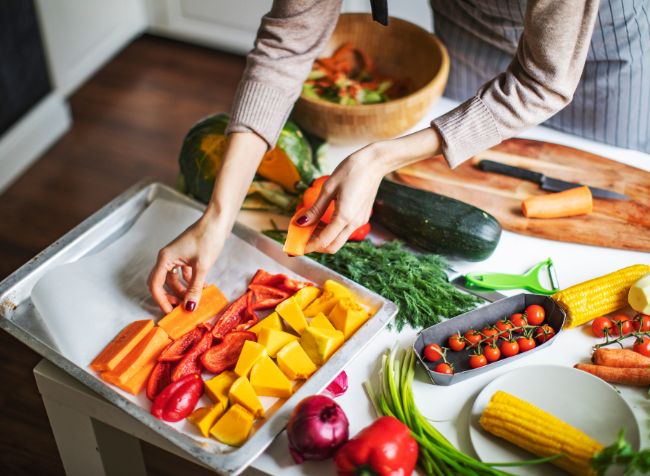
This is something I feel deeply as a chef. I have never believed that healthy food should taste like a compromise. I've spent my career proving that it doesn't have to and that a meal can be deeply nourishing and satisfying at the same time. Cooking can actually be meditative and sharing food can be a form of presence and connection. That flavor and function are not in competition with each other.
The turning point didn't come from a single discovery, it came from two things happening at the same time. I had begun studying alchemy in order to write a book about it, and as I went deeper into the philosophical tradition, I started applying its core principle to my own life: that mind, body, and soul aren't separate systems to manage in rotation. They're one thing. And transformation only happens when you treat them that way.
At the same time, I was doing deeper work on my own health with my doctor, Dr. Tara Scott, who practices through a functional medicine lens by looking at the whole person, not just isolated symptoms. Hormones, gut health, food, stress, genetics, thyroid function, she examines everything in relationship to everything else. I was working through health issues like hypothyroid, gluten intolerance, and other genetic factors I hadn't fully understood before and for the first time, I had a practitioner who was connecting the dots rather than treating each one as separate.
It struck me that what Dr. Scott was doing medically was the equivalent of what alchemy teaches philosophically. The ancient alchemists called it "know thyself", the idea that the deepest transformation begins with understanding your own nature at every level. Functional medicine does the same thing through biology: know your hormones, know your gut, know your genetics, know how your body actually works so you can stop guessing and start responding to these inteconnected systems.
That period was one of the most important in my life, not just because my energy came back, my digestion improved, and I started to feel like myself again, but because the learning was happening on every level at once. I was doing mindset work. I was doing physical work. I was studying a philosophy that told me those things were never meant to be separate. And when I stopped separating them, everything changed.
The word I keep coming back to is experience. Health isn't just a set of numbers on a lab panel. It's not just the absence of symptoms. It's how you feel when you wake up. It's whether cooking dinner feels like a chore or a creative act. It's whether your morning routine drains you or grounds you. It's whether the way you eat, move, and care for yourself adds something to your life, some warmth, some ease, some genuine enjoyment, or quietly takes something away.
I think we underestimate how much this matters. When health becomes pleasurable, people don't just stick with it longer, they engage with it differently. They get curious and experiment. They start to notice what works and what doesn't, not because they're following rules, but because they're paying attention. And that kind of attention, relaxed, open, interested, is where the most lasting changes come from.
This is the part of my philosophy that ties everything together. The mind is where awareness begins. The body is where biology meets the plate. But the soul is where health stops being something you manage and becomes something you actually live with presence, with pleasure, and with the understanding that feeling good is not a reward for doing everything right. It's the whole point.